
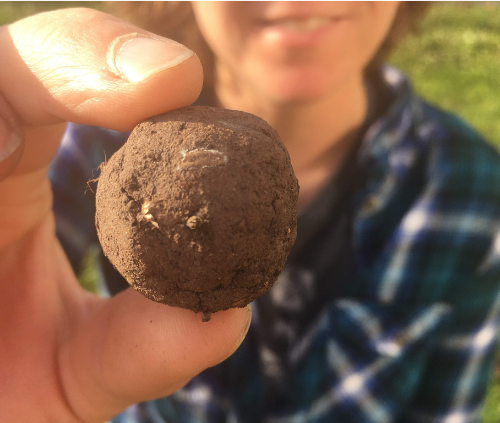
Grow native wildflowers, one seed bomb at a time.
Native seeds, clay and worm castings—ready for a prepared garden patch. Choose a mix for your region and growing conditions, plant with care, and make room for nature.
Find Your Way to Grow
Choose a native wildflower mix for your space or a DIY kit to make your own. Check each product’s species, region and growing conditions before planting.
Shop all seed bombs, DIY kits and bulk packs → · How to plant →
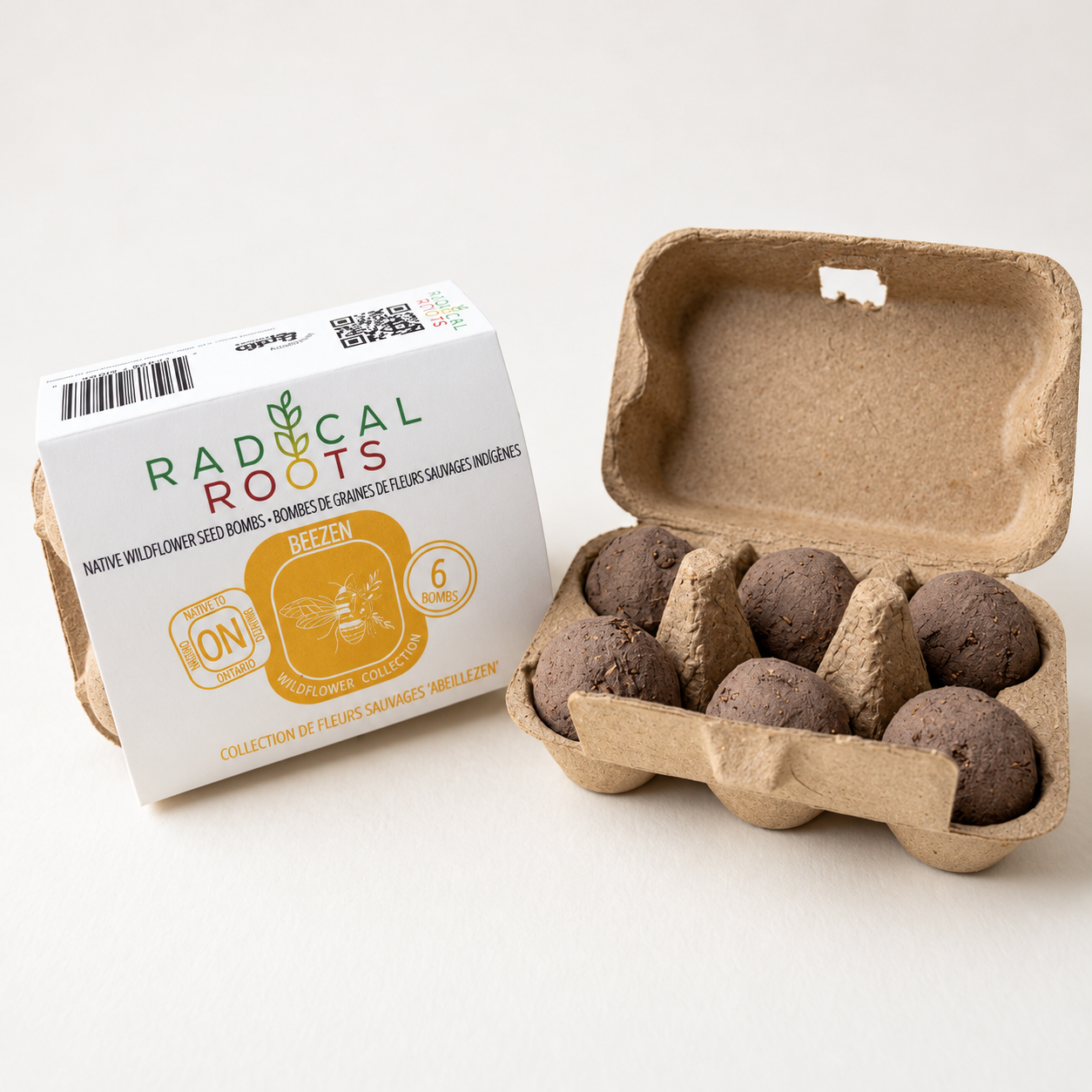
A regionally tailored native wildflower mix for Ontario and Quebec, selected to feed bees and other pollinators from late spring into fall. The blend pairs early bloomers with summer and fall flowers, so nectar and pollen are available across the whole growing season. These seed bombs are best used in sunny to partly sunny locations with well-drained soil, along garden edges, meadows, naturalized lawn areas, roadside plantings and restoration patches. Each seed bomb combines native seeds with clay, worm castings and biochar to protect the seeds until conditions are right for germination.
Included species
Wild Lupine (Lupinus perennis)
Butterfly Milkweed (Asclepias tuberosa)
Lance Leaf Coreopsis (Coreopsis lanceolata)
New England Aster (Symphyotrichum novae-angliae)
Wild Bergamot (Monarda fistulosa)
Evening Primrose (Oenothera biennis)
Purple Coneflower (Echinacea purpurea)
Planting notes
When: Late-fall dormant planting allows natural winter conditions to help seeds that need cold, moist stratification. Spring planting may produce staggered emergence; some seeds may wait until after another winter. Follow your mix’s instructions.
Where: Bare or lightly loosened soil with as little competing vegetation as possible. Place seed bombs on exposed soil for good contact.
How: Place each seed bomb on the soil and if desired press it in so it sits snug against the ground. Leave about 30 cm (1 ft) between seed bombs. Water gently as needed and keep the area moist during germination and early establishment without waterlogging.
What to expect: Native wildflowers take patience. Many establish roots in their first year and bloom more fully in later seasons, and some seeds need a species-specific period of cold, moist conditions before germinating.
Pack contents: Six seed bombs, with a suggested planting area of approximately 6 square feet. Coverage is an estimate, not guaranteed flower cover.
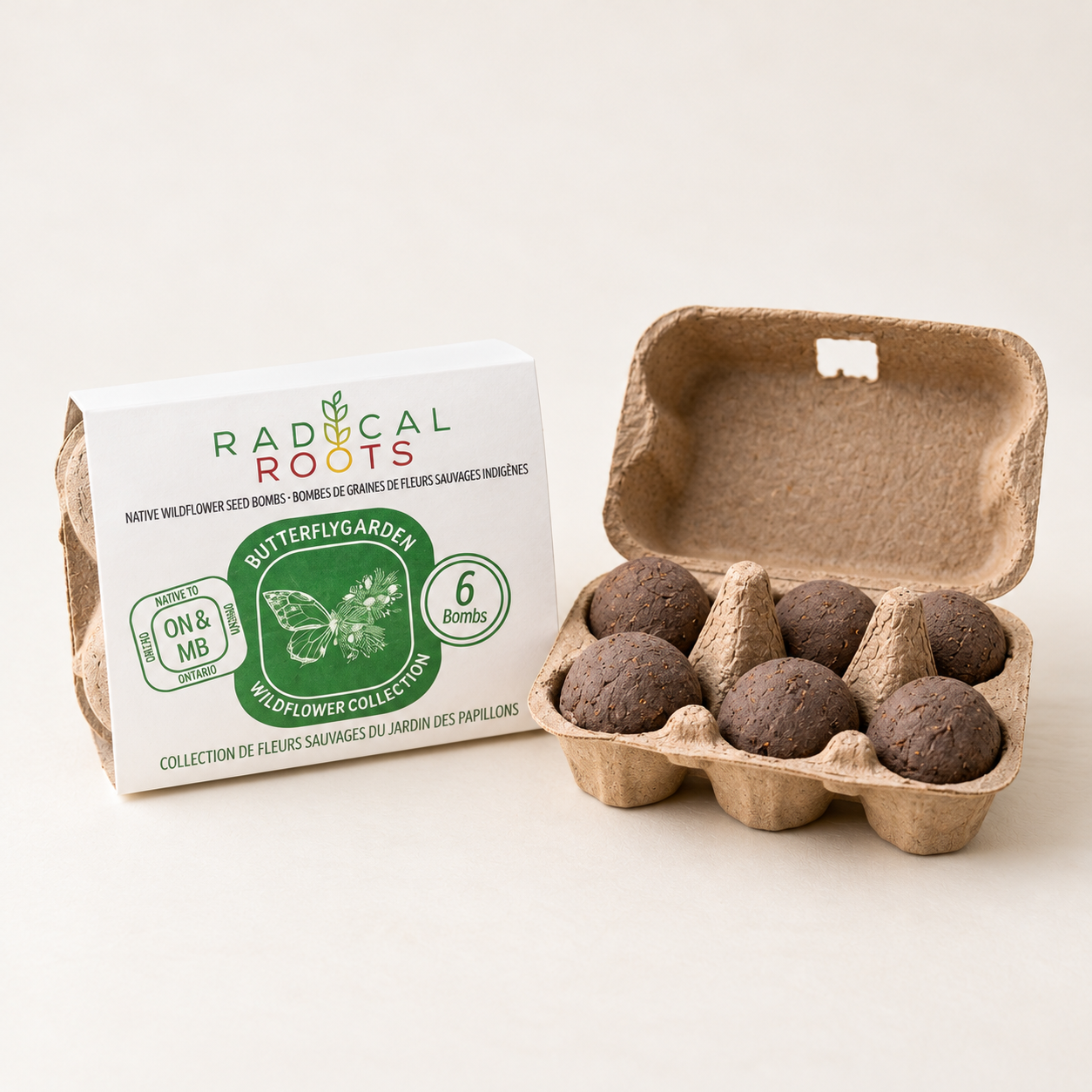
A native seed bomb mix for Ontario and Quebec, selected to feed adult butterflies through the flight season and to provide host plants for caterpillars. Common Milkweed, for example, is the monarch caterpillar’s food plant. Best used in sunny to partly sunny locations along garden edges, meadows, roadside plantings and restoration patches. Each seed bomb packs native seeds into a clay carrier with worm castings to protect them until conditions are right for germination.
Included species
Blue Vervain (Verbena hastata)
Purple Prairie Clover (Dalea purpurea)
Common Milkweed (Asclepias syriaca)
Lavender Hyssop (Agastache foeniculum)
Canada Tick Trefoil (Desmodium canadense)
Square-stemmed Monkeyflower (Mimulus ringens)
Little Bluestem (Schizachyrium scoparium)
Planting notes
When: Late-fall dormant planting allows natural winter conditions to help seeds that need cold, moist stratification. Spring planting may produce staggered emergence; some seeds may wait until after another winter. Follow your mix’s instructions.
Where: Bare or lightly loosened soil with as little competing vegetation as possible. Place seed bombs on exposed soil for good contact.
How: Place each seed bomb on the soil and if desired press it in so it sits snug against the ground. Leave about 30 cm (1 ft) between seed bombs. Water gently as needed and keep the area moist during germination and early establishment without waterlogging.
What to expect: Native wildflowers take patience. Many establish roots in their first year and bloom more fully in later seasons, and some seeds need a species-specific period of cold, moist conditions before germinating.
Pack contents: Six seed bombs, with a suggested planting area of approximately 6 square feet. Coverage is an estimate, not guaranteed flower cover.
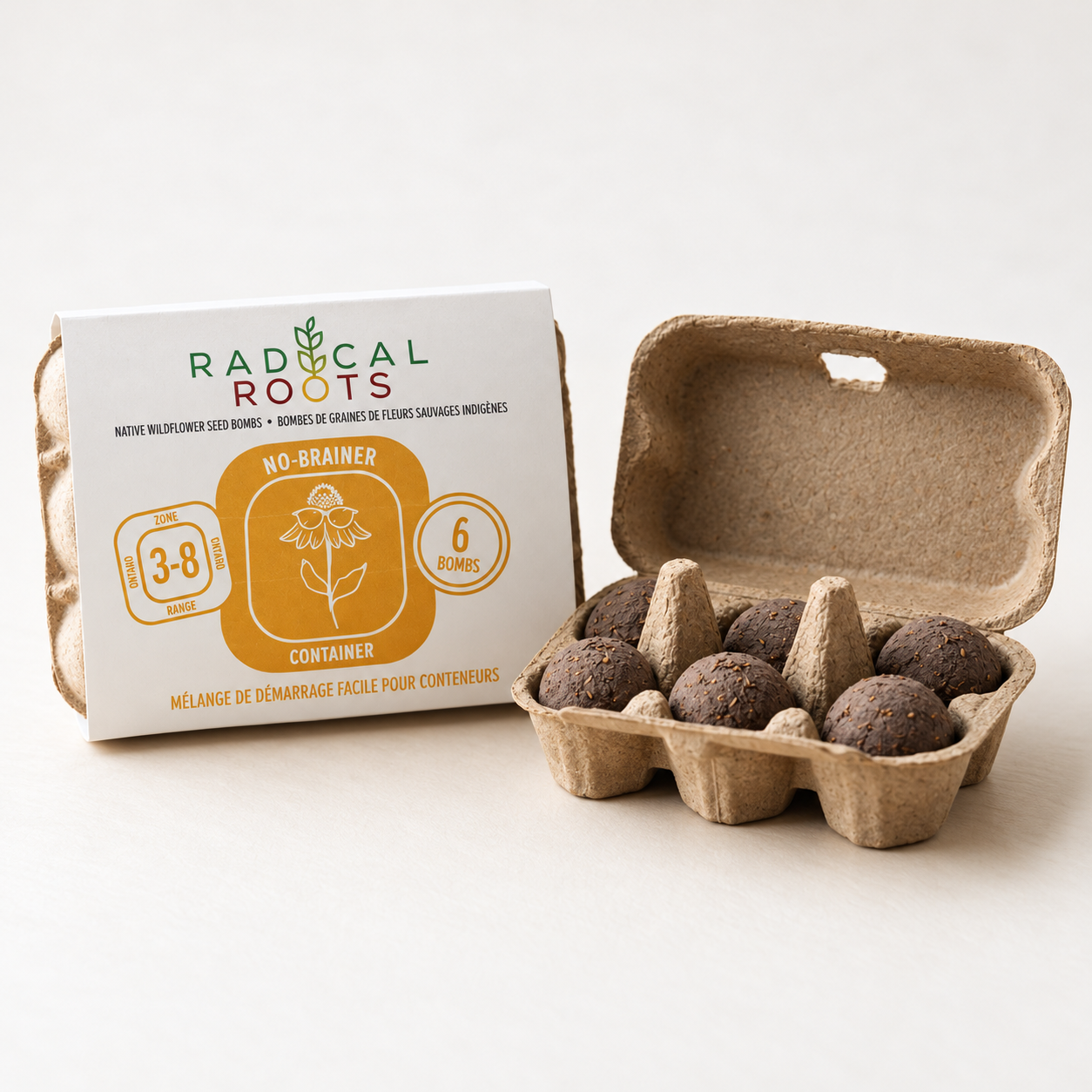
Bring effortless color and pollinator-friendly habitat to challenging spots with No-brainer Container Seed Bombs. Each compact seed bomb contains a curated mix of six hardy wildflower species selected for strong germination, low-maintenance growth, and tolerance for variable soils and drainage. Plant in larger containers, rock gardens, septic bed topsoil, or any sunny to partly sunny site where you want resilient beauty that doesn’t demand constant care.
Prairie Coneflower Ratibida columnifera
Black-Eyed Susans -Rudbeckia hirta
Lance leaf Coreopsis -Coreopsis lanceolata
Purple Coneflower -Echinacea purpurea
Wild Bergamot -Monarda fistulosa
Purple Prairie Clover Dalea purpurea
Planting notes
When: Late-fall dormant planting allows natural winter conditions to help seeds that need cold, moist stratification. Spring planting may produce staggered emergence; some seeds may wait until after another winter. Follow your mix’s instructions.
Where: Bare or lightly loosened soil with as little competing vegetation as possible. Place seed bombs on exposed soil for good contact.
How: Place each seed bomb on the soil and if desired press it in so it sits snug against the ground. Leave about 30 cm (1 ft) between seed bombs. Water gently as needed and keep the area moist during germination and early establishment without waterlogging.
What to expect: Native wildflowers take patience. Many establish roots in their first year and bloom more fully in later seasons, and some seeds need a species-specific period of cold, moist conditions before germinating.
Pack contents: Six seed bombs, with a suggested planting area of approximately 6 square feet. Coverage is an estimate, not guaranteed flower cover.
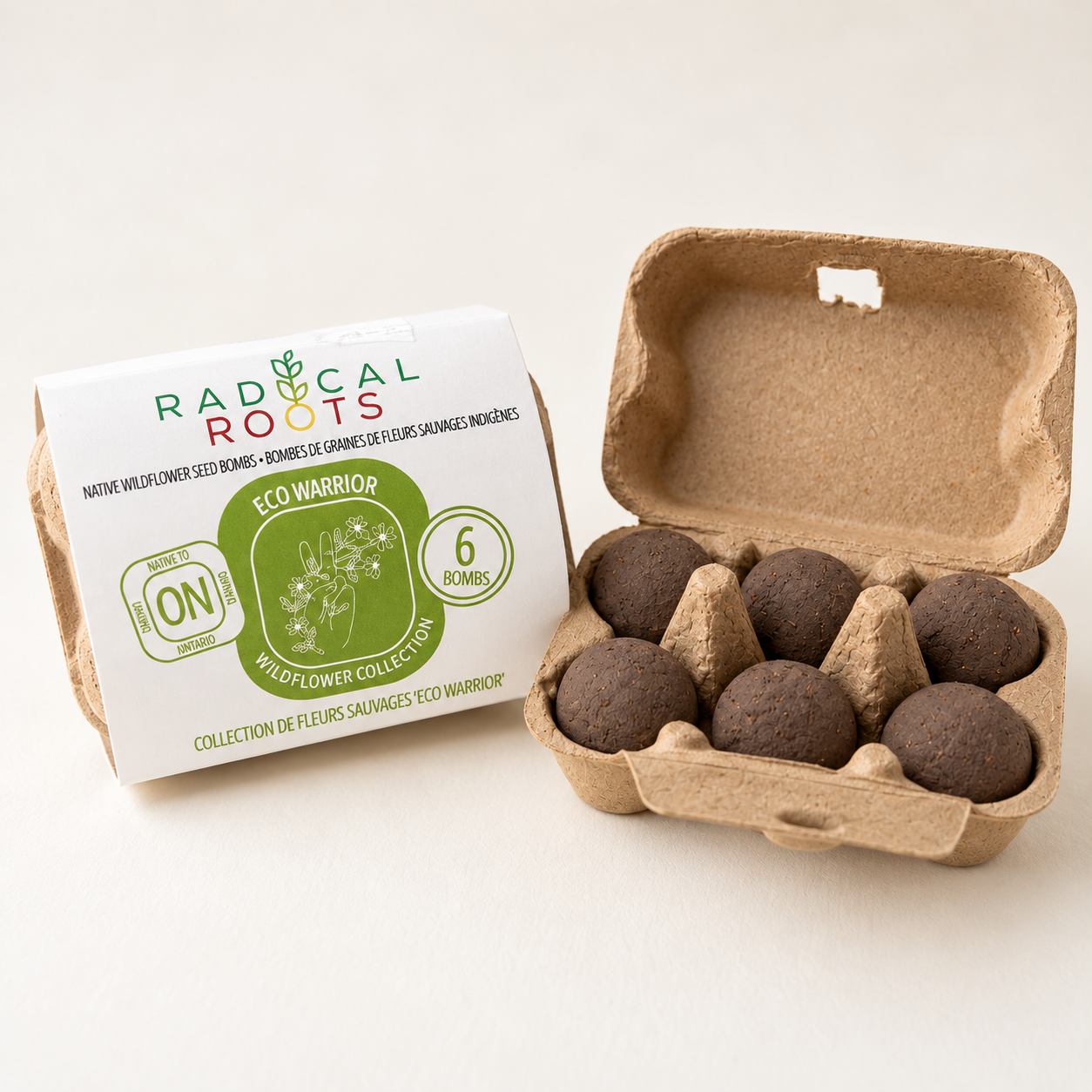
Eco Warrior — All‑in‑One Ontario & Quebec Native Seed Mix
Bring a riot of color, life, and ecological benefit to your yard with Eco Warrior, an all‑in‑one wildflower seed mix formulated from native Ontario and Quebec species. This thoughtfully balanced blend offers season‑long blooms, structural diversity, and rich nectar and pollen resources to attract and support bees, butterflies, and hummingbirds.
Bring back the buzz. Eco Warrior turns ordinary green space into a living support system for pollinators with a resilient, season‑long display of native blooms. Ideal for gardeners, restoration projects, and anyone who wants high impact for low maintenance.
Black-Eyed Susan Rudbeckia hirta
Butterfly Milkweed Asclepias tuberosa
Eastern Columbine Aquilegia canadensis
Gayfeather Liatris spicatus
Lance Leaf Coreopsis Coreopsis lanceolata
New England AstermAster novae-angliae
Ohio Spiderwort Tradescantia ohiensis
Ox-Eye Sunflower Heliopsis Helianthoides
Purple ConeflowerEchinacea purpurea
White Upland AsterAster ptarmicoides
Wild Bergamot Monarda fistulosa
Planting notes
When: Fall is ideal, just before the ground freezes. Spring planting works too once temperatures are cool.
Where: Bare or lightly loosened soil with as little competing vegetation as possible. Seed bombs can be set directly on the soil or even on snow in late fall.
How: Place each seed bomb on the soil and if desired press it in so it sits snug against the ground. Leave about 30 cm (1 ft) between seed bombs. Water lightly if rain isn’t expected.
What to expect: Native wildflowers take patience. Many establish roots in their first year and bloom more fully in later seasons, and some seeds wait for a freeze-thaw cycle before germinating.
Pack contents: Six seed bombs, covering about approx. 6 square feet.
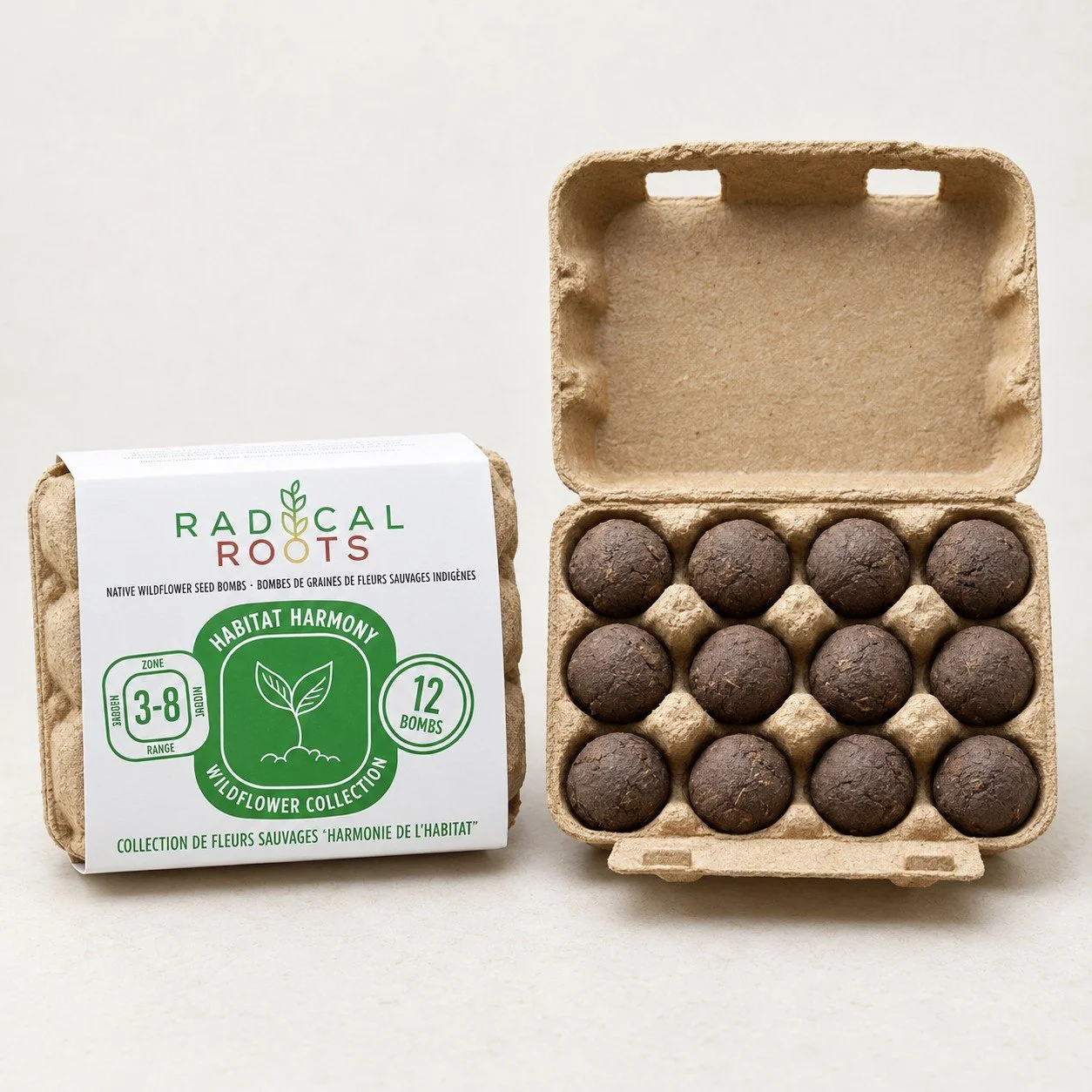
Bring a mix of native wildflowers to a prepared planting area with Habitat Harmony. This 12-pack includes six species with different moisture preferences, suited to thoughtfully planned meadow edges and naturalized spaces. Choose a site and mix appropriate to your region; contact us for help with larger restoration projects.
Pack contents: 12 seed bombs in one carton.
Included species
Canada Anemone (Anemone canadensis)
Great Blue Lobelia (Lobelia siphilitica)
Cardinal Flower (Lobelia cardinalis)
Canada Goldenrod (Solidago canadensis)
Wild Bergamot (Monarda fistulosa)
Hoary Vervain (Verbena stricta)
Planting and care
Prepare exposed soil and manage competing vegetation. Place seed bombs on the surface and press gently for contact, spacing them about 30 cm (1 ft) apart. Water gently as needed and keep the area moist during germination and early establishment without waterlogging.
Many species need or benefit from cold, moist stratification. Late-fall dormant planting lets winter provide natural seasonal conditions. Spring planting may lead to staggered emergence, with some seeds waiting until after another winter. Follow the mix instructions and our How to Plant & FAQs guide.
Native perennial plantings take time: roots and leaves may develop before fuller flowering in later seasons. Seed bombs support a planting plan; they do not replace invasive-plant removal, site preparation or follow-up care.
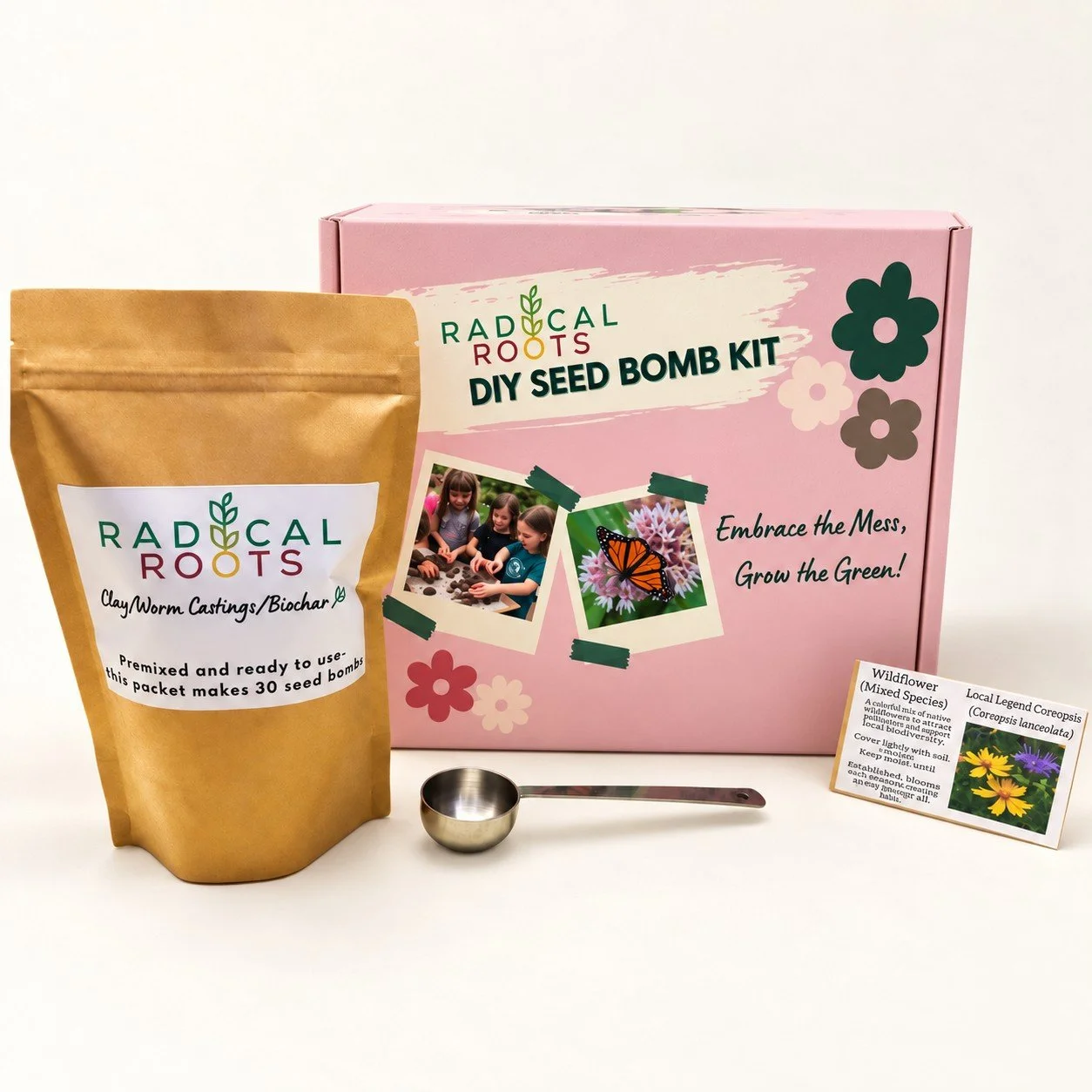
Make your own native wildflower seed bombs with a hands-on activity for home gardens, family time and learning together. This retail DIY kit makes up to 30 seed bombs, depending on the size you make.
What’s inside: seed packets, a premixed planting medium with clay, worm castings and biochar, a measuring spoon, and instructions. The updated pink box contains the same kit materials.
Plant your finished seed bombs in a prepared patch suited to the mix and your region. Many native species need or benefit from cold, moist stratification, so follow the planting instructions and allow time for seasonal germination.
Planning a classroom activity or larger group? Contact us about group quantities, seed bomb workshops and environmental talks. Read our How to Plant & FAQs page for soil preparation, stratification and ongoing care.
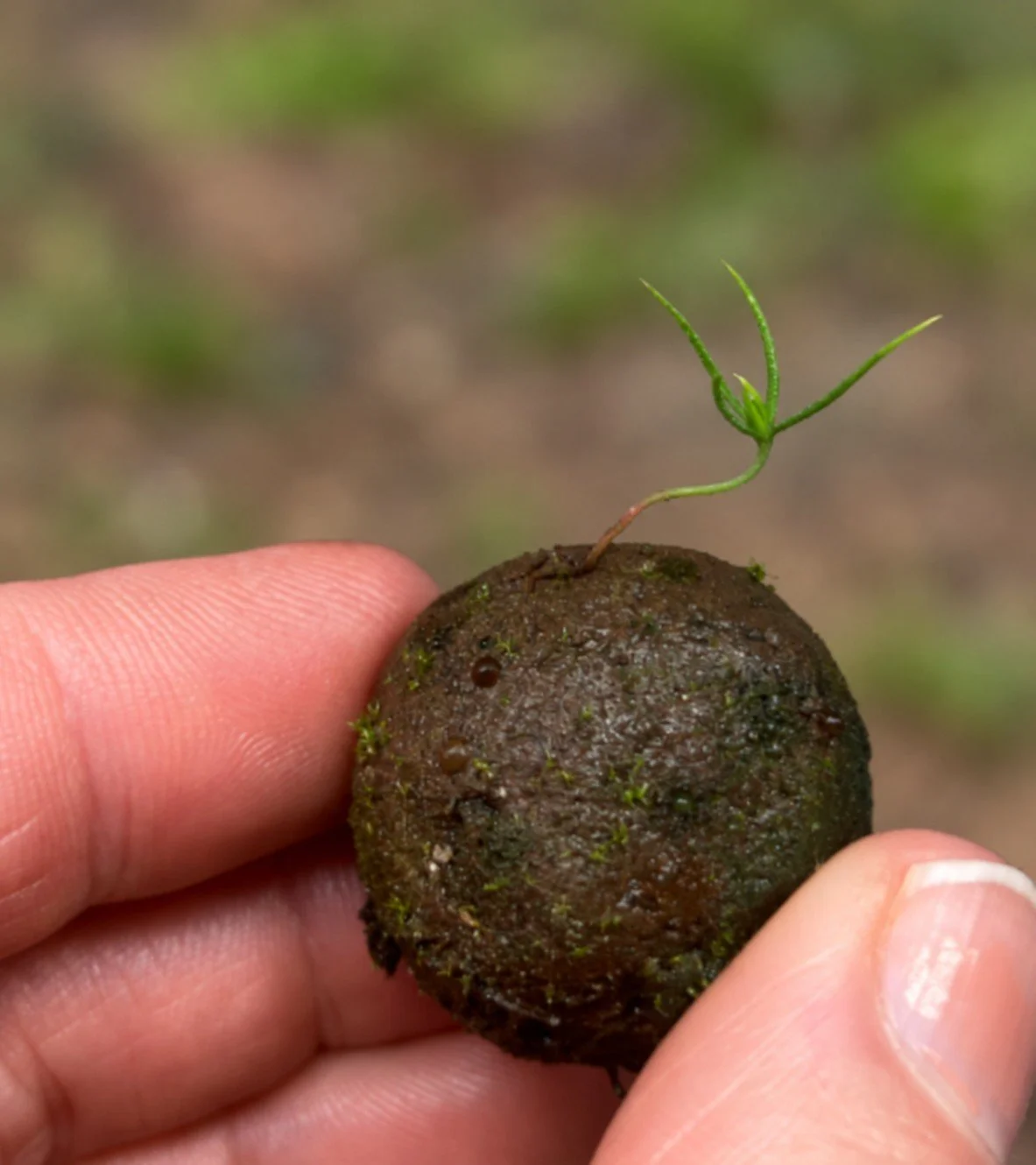
Let’s talk Ecological Restoration
From small community initiatives to large-scale ecological restoration projects, Radical Roots partners with municipalities, conservation organizations, Indigenous communities, businesses, and landowners to restore native ecosystems through science-based, regionally appropriate restoration solutions. Tell us about your project, and we’ll help determine the best path forward.
Our philosophy is to Nurture Nature, meaning we simply add to the ecosystem and let nature work its magic.
Our seed bombs are a restoration tool that can help build ecosystems, compete with invasive species and regrow forest after wildfire.
Customize Your Bombs
Packaging with Your Message
Turn seed bombs into a meaningful gift for clients, employees, guests or your community. Ask about branded cartons and custom drawstring bags for your event or campaign.
Seeds Chosen for Your Site
Start with your location, sunlight, soil moisture and planting goals. We can discuss a custom native seed mix suited to your project, with preparation and seasonal planting guidance.
From Group Orders to Larger Projects
Planning for a school, company event, community group or restoration site? Share your quantity, delivery location and target date so we can discuss options and confirm timing.
1.3M+
Native seed pellets distributed
25+
Restoration projects
completed
Our Impact
Growing participation in native planting since 2018—from home gardens to collaborative restoration projects.
20+
Native species planted
12+
Partnerships
Municipalities, conservation authorities, Indigenous communities and schools.